
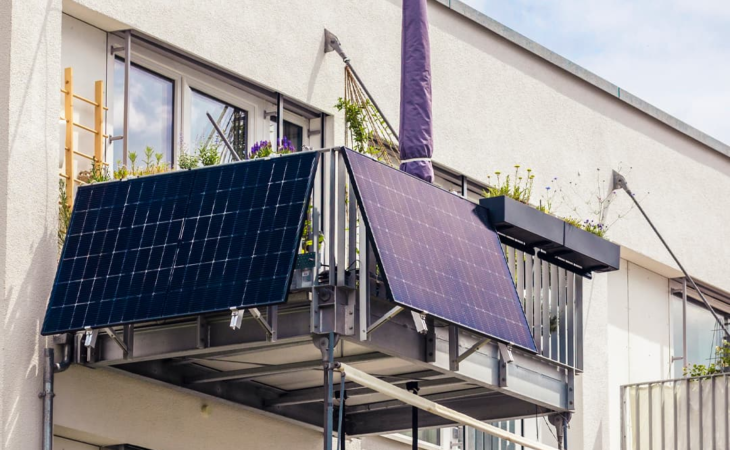

From 27 August, households will be able to buy specially designed solar systems that generate electricity and feed it directly into a home through a standard three-pin socket – potentially giving renters, flat-dwellers and homeowners without suitable roofs a cheaper route into solar panels.
The government has described the change as a way to give households the chance to “significantly cut energy bills”, while Energy Secretary Miatta Fahnbulleh said the technology could make solar “more accessible to households across the country”.
The legal change sets out the requirements products must meet – and this specification matters. The new rules do not mean consumers can simply buy any solar panel online and plug it into the wall. The government says the specification sets the minimum technical standards needed for a system to be “lawfully connected to the grid” and covers its electric design, British plug, mounting system and fire protection.
“The big advantage of plug-in solar is that it will fit almost any property and you can install it yourself without needing a professional fitter or electrician”, technology journalist Alastair Jennings explains. “Just buy the kit, plug it in, and you’ll start to generate instantly usable electricity, cutting your reliance on the grid and ultimately saving you money.”
How do plug-in solar panels work?
The principle is surprisingly straightforward. Solar cells generate electricity from sunlight. A microinverter converts that electricity into the type of alternating current used in homes, and the system feeds it into the household electrical circuit through a standard socket. The plug-in solar panels can be placed in the garden, or on walls and balconies if rules permit.
Can plug-in solar panels reduce energy bills?
The solar electricity is then available for appliances to use, reducing the amount of electricity taken from the grid. This means households could save up to £110 a year, according to the government.
However, this depends on the size and position of panels, sunlight, shading and how much electricity is used during daylight hours. Unlike conventional solar installation, the initial plug-in systems do not include a plug-in battery, so excess electricity cannot simply be stored for use that evening.
How much do plug-in solar panels cost?
The government has suggested that plug-in solar could cost around £400-£600, although the first approved products arriving on the market are considerably more. UKSOL’s systems cost up to £1,199, but insiders suggest budget supermarket Lidl will sell them for around £400 – we’ll just have to wait a little longer for its systems to launch.
As market competition increases, prices are expected to fall.
Where can you buy plug-in solar panels?

UKSOL’s 890W plug in solar panels
UKSOL
Argos is the first major retailer to launch plug-in solar today, with Amazon, Currys, B&Q and Screwfix set to follow. At Argos, you can buy UKSOL’s plug-in solar panels. UKSOL is the first manufacturer to sell plug-in solar panels in the UK, after becoming certified and compliant ahead of the government’s new ruling.
The cheapest 515W kit costs £599 (Argos.co.uk), while the most premium 1260W kit sets you back £989 (Argos.co.uk). There’s also a 460w plug-in solar pro ground mount bundle for £849 (Argos.co.uk), a duo 890w pro plug in solar kit with hybrid mount bundle for £849 (Argos.co.uk), and a 1030w pro plus plug in solar panel kit with hybrid mount bundle for £899 (Argos.co.uk).
Each UKSOL kit from Argos comes with a mount bundle – which includes the hardware needed to attach the solar panel to a roof, wall, balcony, railing, or another fixed structure – or a ground mount bundle, which includes a freestanding frame that lets you install the panel on the ground, rather than attaching it to your house.
Direct from UKSOL, the compact 460W kit costs £849, while the duo 890W kit costs £1,199, but the systems are slighty cheaper through retailer City Plumbing (£670.80, Cityplumbing.com, £951, Cityplumbing.com).
Lidl was among the first big names to announce it was manufacturing plug-in solar panels, but it’s not yet confirmed when they’ll be available. The supermarket is working with the government to produce compliant, tested, lightweight DIY kits featuring two solar panels and a micro-inverter, designed for balconies, patios, or gardens that plug straight into a standard wall socket.
Anker solix has launched its solarbank 4 E5000 Pro in the UK (from £1,699, Ankersolix.com). The product is a solar battery, but you can add on up to 4kW of solar panels at an extra cost. The 5kWh battery stores electricity, but it also includes an inverter and control hardware to supply power to the home through a plug-in connection. Anker’s “plug-in-ready solar battery” is available to pre-order for delivery from 8 September.
Electrical Safety First urges shoppers to only buy from reputable high street retailers to ensure the device is safe and meets the new interim product specification.
“We advise households to avoid buying these devices from third-party sellers on online marketplaces, no matter how appealing this may be, as these platforms are currently not legally responsible for the safety of goods sold via their sites, exposing people to substandard versions that may put you and your home at risk,” the charity advises.
What homes are suitable for plug-in solar panels?
The government has emphasised the technology’s benefits to those who can’t install conventional rooftop solar panels. The plug-in panels are particularly useful for renters and those in flats with balconies. However, renters must have permission from the landlord, and planning or building restrictions can apply depending on where the panels are installed.
There are other things to be aware of, as Luke Osborne, Technical Director at Electrical Safety First, explains. “Plug-in solar panels send electricity in the opposite direction in your property’s wiring. Whilst many modern homes may be able to enjoy this technology safely, we still have concerns plug-in solar panels may damage older devices in people’s homes which protect people from electric shock, known as RCDs.
“Because of this, it is our view that not every home will currently be suitable for plug-in solar. We urge households to ensure they have an RCD suitable for this technology and to consult a competent electrician if they are unsure if they have the right protections in place in their home.”
The charity adds that you should never plug in solar panels through extension leads, travel adapters and multi-way adapters, and to have your electrics checked before you buy.

Leave Your Comment